
The director


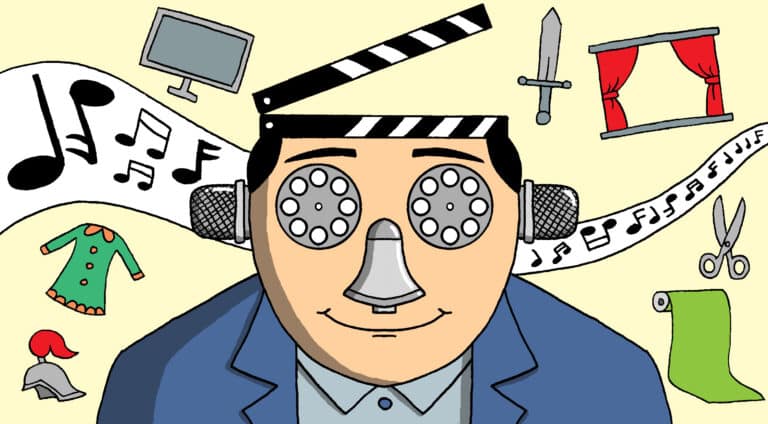
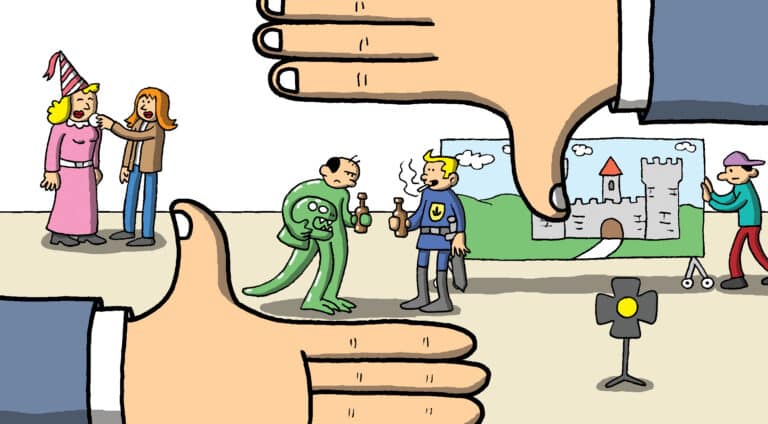
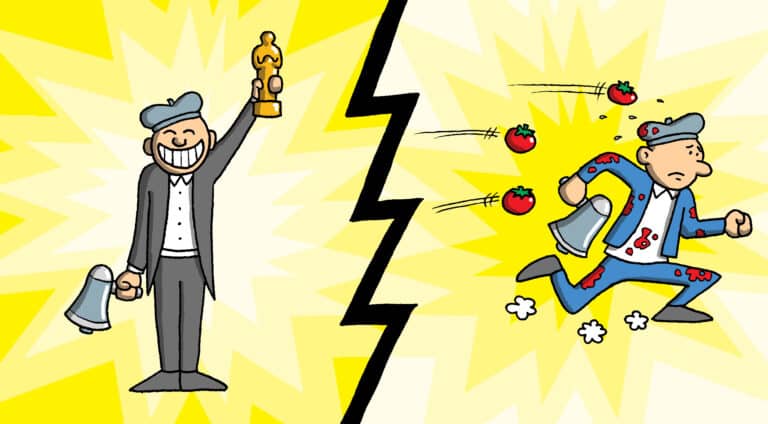
When a video is being shot — an ad, a documentary, an explainer — it’s obvious who does what. The camera operator shoots. The sound recordist holds the boom. The actors stand in front of the camera and say their lines. And the director? Doesn’t hold the camera or any other piece of kit, isn’t on screen, didn’t write the script… just shouts instructions and charges a lot for it. An outsider might think anyone could do the job.
They’d be very wrong. And on smaller crews, the director may also operate the camera, write, or take on other roles.

The foundation and the roof
Put simply, the director is the foundation and the roof of every video. They hold the sets, costumes, music, camerawork, performances and everything else together. From the very first idea, they know what the finished film should look like. They shape the script, set up the shots, choose the costumes — and above all, choose how the story gets told.
The director is involved in every part of the process and has the knowledge and vision to tie it all together. They’re the lead creative, the film’s artistic supervisor. To a film, the director is what a captain is to a ship, or a coach to a team.

Where did the director’s role come from?
Someone had to bring a performance together long before directing became a separate profession. In ancient Greece, playwrights took part in preparing performances of their work; Aeschylus was an actor too. Molière wrote and acted as well as leading a theatre company. We cannot simply map today’s directing role onto those periods, but the need to hold a performance together is not new.
Modern theatre directing developed as a distinct creative role in the late nineteenth century. As film grew, audiences also came to know the work of filmmakers such as D. W. Griffith, who directed his early films in the first years of the twentieth century. As films became more complex, the director’s work gained a more visible place in production.
What a director does on a commissioned video
On commercials, brand films and explainers, the director turns the client’s goals into a film that has the intended effect on its audience. In practice it usually looks like this:
- Treatment. The director reads the script or idea and writes a treatment: how the film will look, its tone, light, rhythm, reference examples. It’s the first moment the client sees the film before the film exists.
- Prep. They work with an illustrator on the storyboard, with the producer on the shooting schedule, and help choose cast and locations.
- Pre-production meeting. Client, agency and crew walk through everything: shots, wardrobe, props, schedule. This is a chance to align decisions and catch misunderstandings before the shoot.
- The shoot. The director guides the actors, decides whether a take is good, and makes sure everything the edit will need gets shot.
- Post-production. They build the film with the editor, decide how it sounds with the sound designer and composer, and how it looks with the colourist.
A director doesn’t need to play an instrument, but must know which music triggers which emotion. Doesn’t need to be a great actor, but must be able to explain to an actor how to play a scene. Doesn’t need to draw, but must be able to tell an animator what the animation needs to achieve. Without a director, every part of the film could pull in its own direction.
Director, producer, DP: who’s who?
- The director decides how the film looks and feels.
- The producer makes sure the film gets made at all: budget, crew, schedule, permits, deadlines. More in Meet the producer.
- The director of photography turns the director’s vision into images: camera, lenses, light.
On smaller projects one person sometimes does two of these jobs. But all three jobs need doing.
And finally, a myth
When budgets are being cut, it’s tempting to think the director is a line you can cross out. Think you’re paying a lot for a director? You’d pay a lot more to shoot (and edit) without one.
Ivan Prlić (Prle)
On the history of directing: Cambridge University Press, Château de Versailles and PBS.
Planning a shoot? Get in touch.
Related topics: video production · TV commercials.
Related reading

What can we do for you?
Your privacy choices
Choose whether to allow YouTube/Vimeo videos and Google Analytics. Both are optional. You can change your choices at any time.
How your choices work
YouTube and Vimeo videos load only if you allow external media. Their providers then receive your IP address and browser information and may use cookies. You can use the website and contact us without allowing them.
With your separate permission, Google Analytics measures visits and successful form submissions. Google receives technical visit information and, for known campaign links, the source, medium and campaign label. Advertising measurement and Meta Pixel are inactive. We remember your choices for 180 days; you can change or withdraw them at any time.