
VR AS a carrier of social change


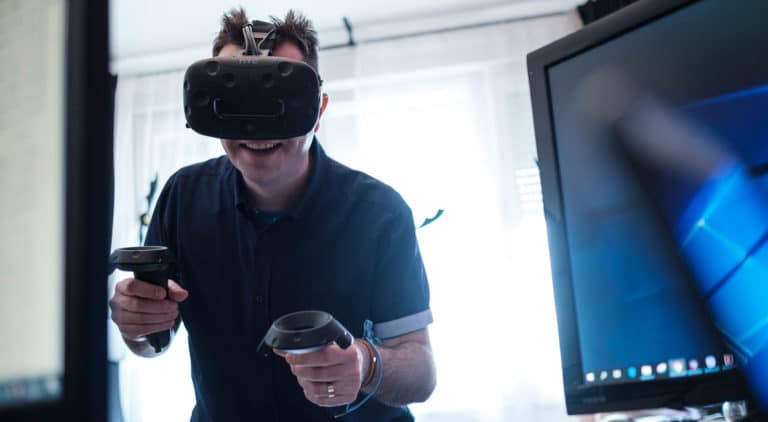
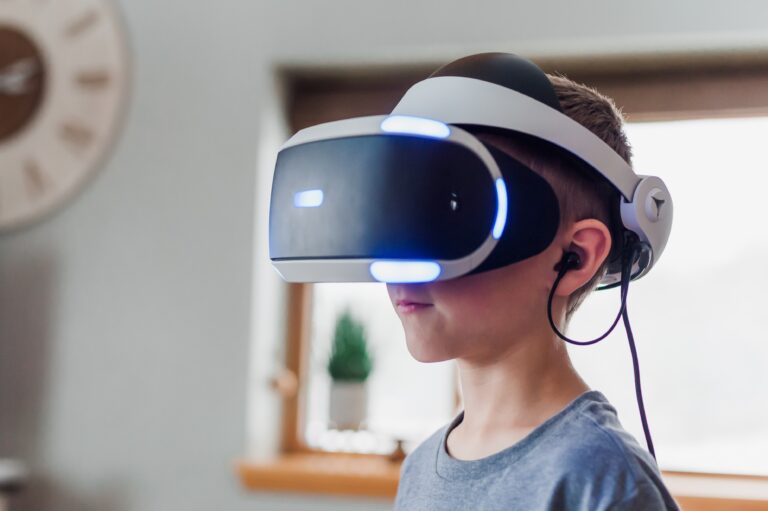
It’s tempting to settle into a more comfortable reality. But when we take off the VR headset, our own world is still there: neighbours, news, problems we can’t dismiss with a button and decisions waiting for us. If we want to change it, we’ll ultimately have to do that ourselves.
Can virtual reality at least help us pause, see something from another angle and start a conversation? We think it can. It’s just as important to ask whose story we’re watching and who had the chance to tell it.
Changing where we look from
Melting ice, plastic in the sea or a changing landscape can be presented through a photograph, a film, a map or a VR experience. Each medium opens up different possibilities. In VR, a viewer can look around a space and linger on a detail that might be outside a conventional frame.
An experience may bring a subject closer for one person and leave another unmoved. The information around it and the action that follows after the headset comes off matter too. If we talk about change, we also need to ask what happened afterwards: did the visitor want to learn more, take part or ask a different question?

History from the front row
Imagine a historical space you can look at from every direction. A spatial presentation can help us picture the relationships between places and objects; it cannot tell us by itself what people thought or turn a reconstruction into a document.
An experience therefore needs sources, context and clear labels for what has been inferred. History deserves more than an impressive backdrop.

In someone else’s shoes?
Imagine an experience about a person without a home, a neighbour we pass on the way out of a shop. It’s easy to place someone in the “it’s their own fault” box; it’s much harder to stop and listen to what actually happened.
But a few minutes in a headset cannot make us another person or give us their lived experience. A better starting point is to involve the people whose stories are being told, respect their choices about what they share and make room for their own voices.
In a 2018 study by Herrera and colleagues, the Becoming Homeless experience was associated in one experiment with more positive attitudes and more petition signatures than one comparison exercise; effects were not the same across all measures. That’s an interesting result for a particular experience and research setting, not a promise that every VR project will create empathy or lasting change.

It doesn’t all have to be difficult
We might also seek another perspective at India’s festival of colours, Rio’s carnival or a cheese-rolling race down a hill in Gloucestershire. Those moments can entertain or surprise us and make us want to learn more about the people and places we see. And afterwards we may want to discover the stories behind those scenes.
Small problems, meaningful conversations
Our actions don’t always have to be grand. We can think about a broad social problem and also help a neighbour we know is struggling. Technology can be part of the conversation; what gives it meaning is what we do with that conversation afterwards.
If you have an idea for a social, humanitarian or environmental project and are thinking about how to tell its story, get in touch.
We care.
Related reading
What can we do for you?
Your privacy choices
Choose whether to allow YouTube/Vimeo videos and Google Analytics. Both are optional. You can change your choices at any time.
How your choices work
YouTube and Vimeo videos load only if you allow external media. Their providers then receive your IP address and browser information and may use cookies. You can use the website and contact us without allowing them.
With your separate permission, Google Analytics measures visits and successful form submissions. Google receives technical visit information and, for known campaign links, the source, medium and campaign label. Advertising measurement and Meta Pixel are inactive. We remember your choices for 180 days; you can change or withdraw them at any time.